
The rise of processed and packaged foods coupled with time constraints and other lifestyle changes has led to bad dietary habits among people. With the daily serving of whole foods such as fruits, vegetables and legumes being replaced by unhealthy foods, nutritional deficiencies are on the rise.
Fortified foods were introduced to counter the inability of our diet to meet the requirements of crucial nutrients and minerals. The benefits of fortified foods are aplenty. They can help you meet your nutritional needs and also help in improving your health in several ways, including weight loss. In this article, we will talk about food fortification and its advantages and disadvantages.
What are fortified foods?
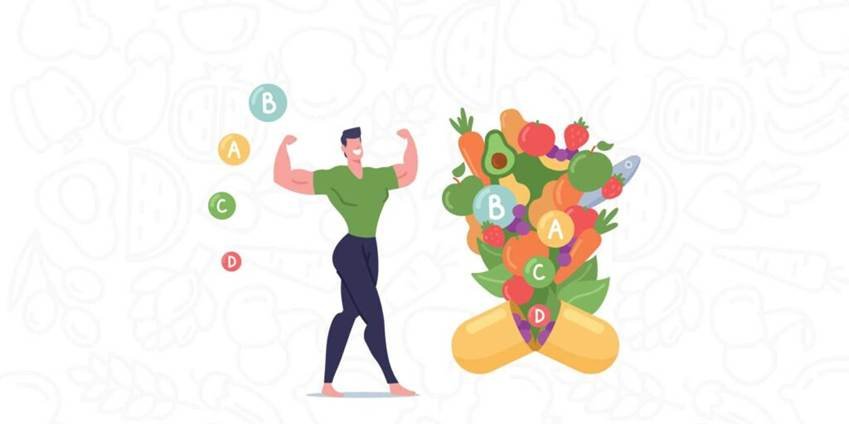
Our diet may not be able to provide sufficient nutrients. Also, several factors such as dietary habits, allergies, and financial impediments may result in a deficiency in essential nutrients that may otherwise be available through these foods. We also lose some nutrients through our cooking methods. Micronutrients are critical for the healthy functioning of our bodies. Lack of sufficient nutrients may result in illnesses. This has resulted in the inception of the method of fortifying foods.
So what is food enrichment? The term itself is self-explanatory. In order to meet the nutritional requirements that we are unable to meet through our daily diet, nutrients are often added to foods to enrich or fortify them. During the production of these foods, chemicals that have vitamins and minerals are added to the food. So how are foods fortified?
There are many types of enriched foods available today. You must have come across fortified breakfast cereals or other foods such as bread or eggs at a grocery store aisle. These are very commonly available across the country and are also economical.
We now know what fortified food is, but what is its importance? Can it help you lose weight, as some studies suggest? Let’s find out!
Importance of food fortification – Benefits for Weight Loss
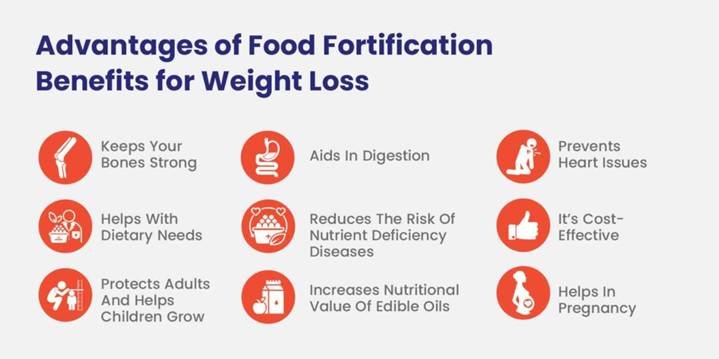
There is a very good reason why many vitamins and minerals are referred to as essential nutrients. They are necessary for healthy living, and a long-term deficiency in these vital nutrients could result in myriad health issues. Many of us do not get the required amount of nutrition from our daily diet. And consuming many nutritionally dense foods could turn out to be a costly affair.
But by enriching foods, you can get the same nutrients at a much lower price. But it is the health factor that truly makes it a necessary addition. Food fortification results in better digestion, improved heart health, and it can also help you lose extra kilos.
1. Helps with weight loss
Studies have shown a direct relationship between nutrient deficiency and weight gain. People who eat unhealthy foods and are deficient in vitamins and minerals are prone to weight gain. Deficiency in nutrients will result in an increased and constant craving for foods. The lack of nutrients in the diet can also lead to tiredness, which holds us back from exercising, thus limiting physical activity. It can also lead to a slower metabolism.
2. Keeps your bones strong
One of the most common deficiencies observed in people is that of vitamin D and calcium. The nutritional profile of several foods today is boosted by the addition of calcium and vitamin D. This results in providing your body with the required amounts of vitamin D and calcium, thereby strengthening your bones.
3. Helps with dietary needs
There are certain dietary restrictions on many people. Vegans who do not consume animal-related products or vegetarians who do not consume meat may miss out on specific
nutrition. B12 is one such vitamin that can be only found in meat or dairy products. Fortified foods with B12 resolve this issue. Certain people may be allergic to some foods and hence miss out on the nutrients that such foods provide. This problem can be solved by eating fortified foods that they are not allergic to.
4. Reduces the risk of nutrient deficiency diseases
Your normal diet may not be able to fulfill your daily nutritional requirements. Foods that are enriched with nutrients help to fill that gap. Long-term nutritional deficiencies could lead to several diseases. Nutrient deficiency diseases such as beriberi, goitre, pellagra, and rickets could be avoided by consuming these foods.
5. Increases nutritional value of edible oils
The best foods to fortify are the ones that are commonly found in kitchens. In India, varied types of oils are used in cooking – soybean, mustard, and groundnut being some of the most common oils. Adding micronutrients to edible oil increases its nutritional value, and since oil is so widely used, it will reach more people. Vitamin A is most suitable for oils because of its oily nature, which goes well with any oil.
6. It’s cost-effective
Nutritionally dense food can often be costly. As an example, fish is rich in omega-3 fatty acids and vitamin B12. But it can be costly to be made a part of the regular diet. Hence, many foods such as milk, eggs, breakfast cereals and plant-based milk such as soy or almond milk are fortified with B12 and omega-3 and other nutrients. This prevents people from consuming them frequently and increases dependency on low-quality foods that do not offer similar health advantages.
7. Helps in pregnancy
Pregnancy can be a challenging time for women. They have to take extra care of themselves and alter routines for their health and that of the child. During pregnancy, a woman needs to eat more and thus, the nutritional requirement increases. Even eating more than usual may not necessarily help. So, foods fortified with essential nutrients can help provide more vitamins and minerals for a healthy pregnancy and a healthy child.
8. Protects adults and helps children grow
As you grow older, your health starts to deteriorate. The bones become brittle, digestive issues prop up, and you are also affected by other problems such as heart health and muscle weakness. The body’s ability to absorb nutrients also diminishes. Adding vitamins and minerals helps provide the micronutrient boost required for a healthy body at an advanced age.
Fortified foods can also provide children with the right nutrition to grow. Children require a lot of nutrition while growing up. So, along with a proper diet, they should be provided with healthy enriched foods to ensure total nutrient intake.
But are they readily available? Luckily most of these are highly popular and easily accessible foods that you can find almost anywhere. So, next time you go out for some grocery shopping, try to add a couple of the following foods that are fortified.
Commonly Fortified Foods
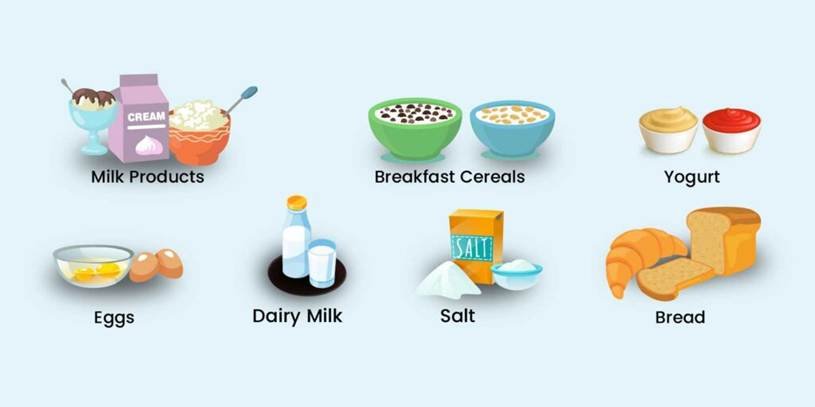
There are several reasons that result in nutrient deficiency—one of the most critical factors being economic. Financial constraints can often lead people to avoid healthy foods that are high in vital minerals and vitamins. Fortunately, some of the most commonly available and economical foods are enriched with nutrients.
The commonly added nutrients include – vitamin D, vitamin B12, folic acid, vitamin A, iodine, and calcium. While the above list of fortified foods in India has its advantages, they also come with certain drawbacks.
Bottomline
Fortified foods help to fill the nutritional gap that you may miss from your regular diet. These foods provide that extra dose of nutrients and minerals to bring balance to your diet. But it is easy for you to be the victim of a nutritional overdose. If you consume too many of these foods, you’ll be eating more than the daily recommended dose of a particular nutrient, which is harmful. Try to balance a fortified diet with non-fortified foods.